Research · 11 min read
Vaginal dryness: causes and what helps— based on 43 stories and medical guidance
In short
Vaginal dryness is most often linked to falling oestrogen levels: during menopause, while breastfeeding or during cancer treatment. It can also be caused by hormonal contraception, some antidepressants, scented soap, stress and not enough arousal12. For sex, a water-based lubricant helps; for everyday comfort, a vaginal moisturiser; and when dryness is due to menopause, the main treatment is local oestrogen prescribed by a doctor145. In the 43 English-language stories we analysed, local oestrogen was used in 25 and described as helpful in 23, and lubricants helped in 15 of the 24 discussions that mentioned them.

Reviewed by: Iryna Kozachkosexologist, expert in sexual health and intimate relationships, 7 years of experience · 12 November 2026
- Research: 43 discussions in 1 language, 24 medical sources
- How we researched
Published: · Reviewed by:
What it is and why it happens
Vaginal dryness means there is less natural lubrication than usual. It can feel like burning, itching, irritation, pain or discomfort during sex12. It is a common complaint: according to Cleveland Clinic, dryness affects more than 15% of women before menopause and more than half after it2.
If the cause is menopause. When dryness is linked to falling oestrogen, doctors speak of genitourinary syndrome of menopause. In 2014 this term replaced “vulvovaginal atrophy”6. It includes dryness, burning, irritation, reduced lubrication, pain during sex, as well as frequent urges to urinate and recurrent urinary tract infections6. The syndrome affects 27–84% of postmenopausal women and is probably underdiagnosed and undertreated5. The British Menopause Society describes it as a chronic condition: without treatment it gets worse over time and usually appears 3–5 years after menopause. Many women consider it “normal ageing” and do not tell their doctor4.
Other causes, according to the NHS and Cleveland Clinic12:
- pregnancy and breastfeeding: hormone levels change;
- hormonal contraception;
- some antidepressants;
- cancer treatment: chemotherapy, radiotherapy, hormone therapy, surgery, removal of the ovaries or womb;
- Sjögren’s syndrome, diabetes, lupus, lichen planus1223;
- not enough arousal, stress, alcohol, smoking;
- scented soaps, gels and douching.
After childbirth. In a systematic review of 65 studies, vaginal dryness occurred in 53.6% of breastfeeding women after childbirth. The authors link it to hormonal changes during lactation21 and propose a separate term, “genitourinary syndrome of lactation”22. In a 2008 study, exclusive breastfeeding was associated with pain during sex after childbirth24.
What people say
We went through 43 discussions where people described what they tried and how it turned out. This is their experience, not statistics.
stories reviewed — this is how often “Local (vaginal) oestrogen, prescribed by a doctor” helped.
- Local (vaginal) oestrogen, prescribed by a doctorhard or did not help: 11 of 2523 of 25
- Lubricantshard or did not help: 10 of 2415 of 24
- Hormone-free moisturisers (incl. with hyaluronic acid)hard or did not help: 7 of 2216 of 22
- Oils (coconut, olive, etc.)hard or did not help: 2 of 109 of 10
- Systemic hormone therapyhard or did not help: 3 of 74 of 7
- Gentle washing, emollients instead of soap5 of 6
- Laser, red lighthard or did not help: 1 of 43 of 4
Show as a table
| What they tried | Mentioned | Helped | Found it hard |
|---|---|---|---|
| Local (vaginal) oestrogen, prescribed by a doctor | 25 | 23 | 11 |
| Lubricants | 24 | 15 | 10 |
| Hormone-free moisturisers (incl. with hyaluronic acid) | 22 | 16 | 7 |
| Oils (coconut, olive, etc.) | 10 | 9 | 2 |
| Systemic hormone therapy | 7 | 4 | 3 |
| Gentle washing, emollients instead of soap | 6 | 5 | — |
| Laser, red light | 4 | 3 | 1 |
Stories, retold without names
For years she treated “thrush” with tablets and pessaries. It turned out the tissue had thinned, and what helped was an oestrogen cream prescribed by her doctor. Improvement came after a few weeks, and if she stops the cream, the symptoms come back.
No names, usernames or cities. Swipe the card or press “Next story”.
What doctors say
Lubricants — during sex. The NHS recommends a water-based lubricant1. The British Menopause Society allows water-based, silicone and oil-based ones, by preference, but warns that oil-based lubricants weaken condoms4. There is little evidence on lubricants themselves: in a review for the WHO, one randomised trial showed that they improve women’s sexual well-being (moderate certainty), while the data on pain and dryness are only observational, with very low certainty19.
Ingredients matter. According to the WHO, the osmolality of vaginal fluid is 260–290 mOsm/kg; for a lubricant it should ideally be no higher than 380, with an interim procurement limit of 1,200. Most commercial lubricants are at 2,000–6,000. The pH for vaginal use is around 4.520. High-osmolality lubricants damaged tissue in laboratory studies, although there is no direct clinical evidence of harm to the vagina in people with dryness; the WHO document was written for procuring lubricants to use with condoms20. Glycerin can feed Candida yeast, and a moisturiser is best chosen without parabens and with an acidic pH18. A link between parabens and breast cancer has not been proven18.
Moisturisers — regularly, separate from sex. The NHS recommends vaginal moisturisers1, Cleveland Clinic suggests using them every few days2, and the British Menopause Society at least twice a week; it considers them comparable in effectiveness to local oestrogen4. For women with a history of breast cancer, ACOG puts non-hormonal products first and notes that none of them is best and sometimes several have to be tried10. The evidence is mixed: in a randomised trial of 302 women over 12 weeks, neither a moisturiser nor an estradiol tablet did better than a placebo gel8, and a review of 46 studies says moisturisers “may reduce dryness”, with low certainty9. In a review of 5 studies (335 women), hyaluronic acid did not differ from oestrogens16; another review calls it “generally effective” but asks for higher-quality studies17.
Local oestrogen. This means estradiol tablets or pessaries, a ring, or an estriol cream or gel45. A Cochrane review (30 studies, 6,235 women) showed that all forms are better than placebo, with no difference between them, although the quality of evidence is low to moderate7. NAMS considers local oestrogen effective for moderate to severe symptoms and does not require adding a progestogen5. The British Menopause Society, citing NICE 2024, says it can be used for as long as needed, with an annual review. Improvement comes in the first weeks, the full effect later4. Systemic hormone therapy on its own does not always relieve the symptoms, and local treatment is then added4. Which medicine, in which form and on which regimen is for the doctor to decide.
After breast cancer. ACOG advises starting with non-hormonal products. If they have not helped, low-dose vaginal oestrogen is possible, including on tamoxifen, and on aromatase inhibitors only as a joint decision with the oncologist10. The British Menopause Society also requires the decision to be made together with an oncologist4. A study of 49,237 women in Scotland and Wales found no increase in breast cancer mortality11, and one in the USA (42,113 women) found no increase in recurrences over 5 years13. In Denmark (8,461 women), recurrences were not more frequent overall, but they were more frequent in women on aromatase inhibitors12. All these studies are observational.
Other options prescribed by a doctor. Prasterone is vaginal DHEA: in a phase III trial it reduced pain during sex and dryness compared with placebo145. Ospemifene is a tablet for those who cannot use or do not want vaginal products; side effects include hot flushes, and it is used with caution in thrombosis415. There is not enough evidence for laser: NAMS does not recommend it5, and in the UK it is used only in research4. If pain during sex is linked to muscle tension from expecting pain, the British Menopause Society recommends a pelvic floor physiotherapist4.
Lifestyle. Stop smoking; regular sexual activity improves blood flow and tissue elasticity4. More time for foreplay, and no scented products in the intimate area1.
Where people and doctors disagree
Each card is one topic. Flip it to see the other side, or switch all at once. The full comparison is in one table below.
The most praised option: used in 25 of 43 discussions and described as helpful in 23. Side effects or “didn't help” in 11, most often thrush. In 4 discussions, symptoms came back when it was stopped.
Comes up in 11 of 43 discussions: “it's like HRT”, breast cancer in the family, breastfeeding. Some refused oestrogen despite severe symptoms.
In 6 of 43 discussions, dryness was linked to childbirth and breastfeeding, and in all six it went away after weaning or when periods returned — usually after 6–18 months.
Praised in 9 of the 10 discussions that mention them. Only one of them mentioned that oil damages latex condoms.
Burning, itching or thrush after a lubricant is described in 5 of 43 discussions, in one of them after a lubricant containing glycol.
Helped in 16 of the 22 discussions that mention them; did not help or burned in 7. In 4 discussions they were tried by cancer patients, including when oestrogen was off-limits.
In 4 of 43 discussions, dryness was treated for months, and sometimes years, as thrush or a urinary tract infection.
In 3 of the 4 discussions about laser or red light, there was partial benefit; in one of them, pain during sex remained.
| Topic | People | Doctors | Verdict |
|---|---|---|---|
| Local oestrogen | PeopleThe most praised option: used in 25 of 43 discussions and described as helpful in 23. Side effects or “didn't help” in 11, most often thrush. In 4 discussions, symptoms came back when it was stopped. | DoctorsThe main treatment for dryness in menopause: in a Cochrane review all forms were better than placebo, with no difference between ring, tablet and cream. But in a 2018 randomised trial, an estradiol tablet did no better than a placebo gel, and a 2024 review rates confidence in the evidence as low.4, 5, 7, 8, 9 | Agree |
| Fear of oestrogen | PeopleComes up in 11 of 43 discussions: “it's like HRT”, breast cancer in the family, breastfeeding. Some refused oestrogen despite severe symptoms. | DoctorsLocal oestrogen does not require a progestogen; according to the British consensus, it is used for as long as needed, with an annual review. After breast cancer, large observational studies found no increase in mortality. The exception is aromatase inhibitors: in a Danish cohort, recurrences were more frequent. So after breast cancer the decision is made together with an oncologist, and on aromatase inhibitors with particular caution.4, 5, 10, 11, 12, 13 | Disagree |
| Breastfeeding | PeopleIn 6 of 43 discussions, dryness was linked to childbirth and breastfeeding, and in all six it went away after weaning or when periods returned — usually after 6–18 months. | DoctorsA review of 65 studies confirms that dryness during lactation is common and linked to hormonal changes. The sources we reviewed contain no data on the safety of vaginal oestrogen while breastfeeding — this is worth discussing with a doctor.21, 22 | Partly |
| Coconut and other oils | PeoplePraised in 9 of the 10 discussions that mention them. Only one of them mentioned that oil damages latex condoms. | DoctorsThere is no single position. Cleveland Clinic is against oils as a vaginal lubricant, while the British consensus allows oil-based lubricants by preference. What all sources agree on: oils and petroleum jelly must not be used with latex condoms.3, 4, 20 | Disagree |
| Why lubricant can burn | PeopleBurning, itching or thrush after a lubricant is described in 5 of 43 discussions, in one of them after a lubricant containing glycol. | DoctorsAccording to the WHO, most lubricants have an osmolality several times higher than vaginal fluid, and such lubricants damaged tissue in laboratory studies; there is no direct clinical evidence on burning in people with dryness. Glycerin can feed Candida yeast. But Cleveland Clinic considers water-based lubricants with glycerin or aloe and a short ingredient list to be fine.3, 18, 20 | Partly |
| Moisturisers and hyaluronic acid | PeopleHelped in 16 of the 22 discussions that mention them; did not help or burned in 7. In 4 discussions they were tried by cancer patients, including when oestrogen was off-limits. | DoctorsThe British consensus considers them comparable in effectiveness to local oestrogen, but in a randomised trial a moisturiser did no better than a placebo gel. In small studies, hyaluronic acid was no less effective than oestrogens; the evidence is low to moderate.4, 8, 9, 16, 17 | Partly |
| “It's thrush” | PeopleIn 4 of 43 discussions, dryness was treated for months, and sometimes years, as thrush or a urinary tract infection. | DoctorsThe British consensus says urinary symptoms are mistaken for infection and considers an examination necessary to rule out skin conditions of the vulva and other causes.4 | Agree |
| Laser | PeopleIn 3 of the 4 discussions about laser or red light, there was partial benefit; in one of them, pain during sex remained. | DoctorsThere is not enough evidence and no recommendation; in the UK, laser is used only within research studies.4, 5 | Disagree |
Sexologist’s comment
Vaginal dryness can occur at any age, and the cause is not always related to hormones. It is important not to ignore discomfort, especially if there is pain during intimacy, burning or irritation. A well-chosen lubricant or moisturiser often helps, but if dryness bothers you all the time, it is better to see a gynaecologist and find out the cause. And most importantly, you should not put up with discomfort, because in most cases this problem can be solved.
What to do, step by step
- Remove irritants
Scented soap, shower gels and douching are among the causes of dryness12. Wash the vulva with water or an unscented product and wear cotton underwear12. In 5 of the 43 discussions we analysed, switching from a scented product was part of the solution.
- For sex — a lubricant
The NHS recommends a water-based lubricant before sex and more time for foreplay1. Ideally without fragrance, flavour, colouring, “warming” or “tingling” effects3. If a water-based one dries out quickly, try a silicone one: it is compatible with latex20, and in 4 discussions it was praised because it “doesn't dry out”. How to choose a lubricant by its ingredients is covered in a separate article, “Water-based lubricant: how to choose”.
- For every day — a moisturiser
A vaginal moisturiser is applied regularly, regardless of sex: every few days according to Cleveland Clinic, at least twice a week according to the British consensus24. These are different products: a lubricant makes sex easier, a moisturiser supports the tissue. In some stories they were confused, and only lubricant was used for years.
- One new product at a time
In one story, a woman started several products at once and could no longer tell what was helping and what was irritating — things got worse. Introduce one new product at a time and wait before changing: in one story, a non-hormonal gel only started working after 10 weeks.
- No better after a few weeks — see a doctor
If self-care has not helped after a few weeks, you need a doctor1. An examination rules out skin conditions of the vulva and other causes4. If the dryness is linked to menopause, the doctor may offer local oestrogen, prasterone or ospemifene45. The doctor chooses the medicine, the form and the regimen.
- If you have been treated for breast cancer
Non-hormonal options — moisturisers and lubricants — are tried first10. The question of local oestrogen is decided together with your oncologist45. This is especially important if you take aromatase inhibitors: in a Danish cohort, women on them had more recurrences1012.
Swipe the steps sideways →
When to see a doctor
- Dryness lasts for several weeks, and lubricant, a moisturiser and avoiding scented products do not help1.
- Dryness gets in the way of daily life or sex, or is affecting your relationship12.
- You have unusual discharge1.
- Bleeding after sex, between periods or after menopause1.
- Frequent urges to urinate, burning when passing urine, recurrent cystitis: this is worth checking with a test4.
- Itching or changes in the skin of the vulva: lichen sclerosus and other conditions need to be ruled out4.
- You are being treated for cancer or taking hormone therapy — discuss the dryness with your oncologist rather than putting up with it410.
Products that may help
Products do not cure anything, but they may help where the research points to them. The Keks shop delivers within Ukraine only.
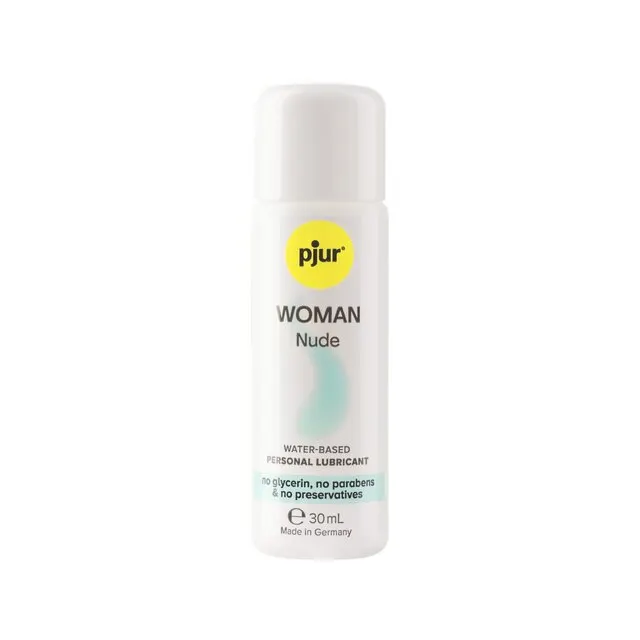
pjur Woman Nude water-based lubricant, 30 ml
Why it is here. A water-based lubricant without glycerin, parabens or preservatives, unscented; according to the product page, it is compatible with condoms and toys. It contains propylene glycol, and the manufacturer does not state the osmolality. The 30 ml size lets you check how sensitive skin tolerates it: in 5 of 43 discussions, a lubricant caused burning, itching or thrush. It may help with dryness during sex, but it does not treat thinning tissue14.
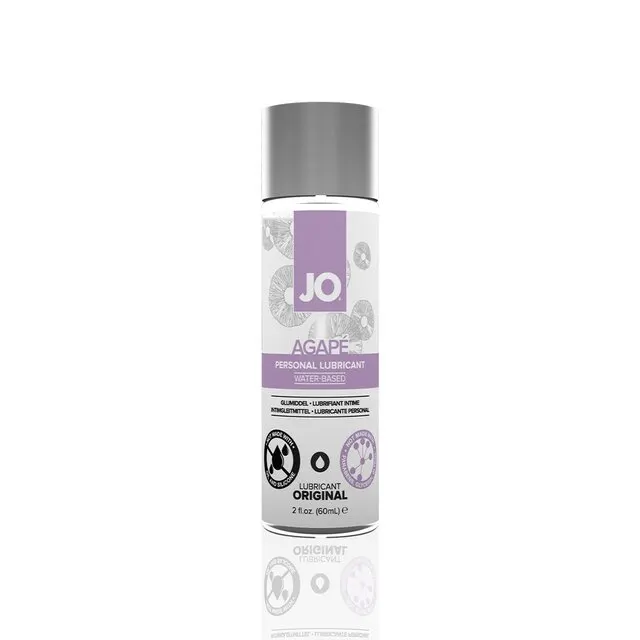
JO Agape Original water-based lubricant, 60 ml, free of glycerin, propylene glycol and parabens
Why it is here. A water-based lubricant without glycerin, propylene glycol or parabens; it contains propanediol and the preservative sodium benzoate. The seller states an osmolality of 241, but without a unit and without independent testing. Condom compatibility is not stated on the product page — check the packaging. An option for those who want to try a lubricant with a different formula; if the burning keeps coming back, that is a reason to see a doctor1.
- Oils, petroleum jelly, baby oil and lotions with latex condoms: they break down latex20. Cleveland Clinic advises against oils and petroleum jelly as a vaginal lubricant altogether3.
- Warming and tingling lubricants and lubricants with an anaesthetic: their safety has not been assessed, the WHO does not recommend them for procurement, and “warming” ones have high osmolality20. For sensitive skin, Cleveland Clinic also advises avoiding scented, flavoured and coloured products3.
- Lubricants with the spermicide nonoxynol-9 and with polyquaternium20.
- Creams and lotions not intended for the vagina: they can cause irritation or infection12.
- “Tightening” gels and “rejuvenation” products: they do not appear in medical sources on dryness, and dryness is not a matter of “tightness”.
- Expecting a lubricant or moisturiser to cure thinning tissue. They ease symptoms, but treatment is prescribed by a doctor45.
Frequently asked questions
Why am I dry when I'm aroused?
Arousal is not the only factor. Dryness can be caused by hormonal changes (menopause, breastfeeding, hormonal contraception), some antidepressants, cancer treatment, Sjögren's syndrome and diabetes, as well as scented soap12. If you are always dry, even when strongly aroused, it is worth seeing a gynaecologist.
Is vaginal dryness at 25–30 normal?
It happens: according to Cleveland Clinic, dryness affects more than 15% of women before menopause2. Before menopause, causes include contraception, breastfeeding, antidepressants, stress and Sjögren's syndrome1223. In one of the stories we analysed, doctors told the woman “you're too young”, and she spent about three years looking for help.
Can the pill or a hormonal coil cause vaginal dryness?
Dryness after giving birth — when will it go away?
While breastfeeding, oestrogen levels are lower, and dryness during this period is common121. In all 6 stories about childbirth that we analysed, it went away after weaning or when periods returned, usually after 6–18 months. If dryness is affecting your life, there is no need to wait: you can start a lubricant and a moisturiser straight away, and see a doctor if there is pain1.
What is the difference between a lubricant and a moisturising gel?
Can I use coconut oil instead of lubricant?
Not if you use latex condoms: oils break them down20. Without a condom, doctors' positions differ: the British consensus allows oil-based lubricants by preference4, while Cleveland Clinic is against oils as a vaginal lubricant3. In the stories we analysed, oils were praised, but in one of them there was a yeast infection after coconut oil.
Is it thrush or dryness?
They can be confused, so an examination is needed4. In 4 of the 43 discussions we analysed, dryness was treated with antifungals for months, and sometimes years, while a different treatment helped. If “thrush” keeps coming back, ask your doctor to check for other causes too.
Is vaginal oestrogen safe after breast cancer?
Large observational studies found no increase in breast cancer mortality11 and no increase in recurrences over 5 years13 in women who used vaginal oestrogen. But in a Danish cohort, women on aromatase inhibitors had more recurrences12. So non-hormonal options are tried first, and the decision about oestrogen is made together with an oncologist410.
How we researched this
We analysed 43 discussions and personal stories involving around 300 people: 32 threads from the British forum Mumsnet, 4 from forums for breast cancer patients, 2 from the American sexual health website Scarleteen, 1 from Offbeat Home and 4 personal stories in the media and on blogs. The unit of count is one thread or one story. An approach was counted if at least one participant described personal experience with it; advice without personal experience was not counted. Collected on 11 November 2026.
All 43 stories are in English. We were unable to analyse Russian- and Ukrainian-language discussions: the largest forums are protected by “are you a robot” checks, and we chose not to bypass them; on other platforms, search did not return pages with personal experience. We did not use Reddit either. As a result, the sample is dominated by middle-aged British women, menopause and prescription treatment within the British health system. There are few stories from younger women or about contraception, antidepressants and Sjögren’s syndrome. Access to doctors and medicines in Ukraine is different. Ukrainian and Russian clinical guidelines were not checked in this research.
One more piece mentioning brands looked like native advertising. We did not count it, just as we do not count sources with a commercial interest; this does not change the conclusions. One story was written by a minor, and we do not use retellings from it. Coding was done by hand, with a possible error of 1–2 discussions. People’s experience is not statistics: we show how many discussions mention something, not what percentage of women experience it. Medical facts come only from medical and scientific sources, each numbered in the list.
People's experience is not statistics. We count how many discussions mention something, not what percentage of people experience it. All 43 stories are in English, 32 of them from the British forum Mumsnet.
Sources
- NHS — Vaginal dryness (reviewed 24 July 2025)
- Cleveland Clinic — Vaginal Dryness
- Cleveland Clinic Health Essentials — What works for vaginal dryness and is natural best (2022)
- British Menopause Society — Genitourinary Syndrome of Menopause, consensus statement (revised November 2025)
- The Menopause Society (NAMS). The 2020 genitourinary syndrome of menopause position statement. Menopause 2020;27(9):976–992
- Portman D.J., Gass M.L. Genitourinary syndrome of menopause: new terminology (ISSWSH, NAMS). Maturitas 2014
- Lethaby A. et al. Local oestrogen for vaginal atrophy in postmenopausal women. Cochrane 2016, CD001500
- Mitchell C.M. et al. Vaginal estradiol or vaginal moisturizer vs placebo: RCT. JAMA Intern Med 2018
- Danan E.R. et al. Hormonal treatments and vaginal moisturizers for GSM: systematic review. Ann Intern Med 2024
- ACOG Clinical Consensus. Treatment of urogenital symptoms in individuals with a history of estrogen-dependent breast cancer. Obstet Gynecol 2021 (full text paywalled; position as summarised by GuidelineCentral: https://www.guidelinecentral.com/guideline/1358607/)
- McVicker L. et al. Vaginal estrogen therapy use and survival in females with breast cancer. JAMA Oncol 2024
- Cold S. et al. Systemic or vaginal hormone therapy after early breast cancer: Danish cohort. JNCI 2022
- Agrawal P. et al. Safety of vaginal estrogen therapy for GSM in women with a history of breast cancer. Obstet Gynecol 2023
- Archer D.F. et al. Intravaginal prasterone for dyspareunia: phase III RCT. Menopause 2015
- Simon J.A. et al. Ospemifene vs current therapies: network meta-analysis. Menopause 2023 (authors linked to the manufacturer)
- dos Santos C.C.M. et al. Hyaluronic acid in postmenopause vaginal atrophy: systematic review. J Sex Med 2021
- Buzzaccarini G. et al. Hyaluronic acid in vulvar and vaginal administration: systematic review. Climacteric 2021
- Edwards D., Panay N. How important is vaginal lubricant and moisturizer composition? Climacteric 2016
- Kennedy C.E. et al. Lubricants for the promotion of sexual health and well-being: systematic review (for WHO). SRHM 2022
- WHO / UNFPA / FHI360. Use and procurement of additional lubricants for male and female condoms. WHO/RHR/12.33, 2012
- Perelmuter S. et al. Postpartum and lactation-related genitourinary symptoms: systematic review. Obstet Gynecol 2025
- Perelmuter S. et al. Genitourinary syndrome of lactation. Sex Med Rev 2024
- NHS — Sjögren's syndrome (reviewed 27 November 2024)
- Solana-Arellano E. et al. Women's dyspareunia after childbirth. Rev Panam Salud Publica 2008
- Mumsnet — forum discussion (UK, English)people’s experience
- Mumsnet — forum discussion (UK, English)people’s experience
- Breast Cancer Now — forum discussion (UK, English)people’s experience
- Mumsnet — forum discussion (UK, English)people’s experience
- Mumsnet — forum discussion (UK, English)people’s experience
- Vice — personal story (USA, English)people’s experience
A project of the Keks shop. Not a substitute for medical advice.
Reviewed by: Iryna Kozachko, sexologist, expert in sexual health and intimate relationships, 7 years of experience ·