Research · 11 min read
Pain during sex: causes and what helps— based on 46 stories and medical guidance
In short
Pain during sex is a symptom, not a diagnosis. It can be felt at the entrance to the vagina (dryness, vulvodynia, infections, skin conditions of the vulva, vaginismus) or deep inside (endometriosis, pelvic inflammation, cysts, the position of the womb), and what helps depends on the cause13. So the place to start is a gynaecologist. Until your appointment, do not carry on through the pain, give arousal more time and, if the pain is deep, choose positions in which you control the depth yourself1215. In the 46 stories we analysed, lubricant helped in 7 of the 16 discussions where it was tried and did not help in 8, including with deep pain and a scar after childbirth; controlling depth helped in 7 of 11.

Reviewed by: Iryna Kozachkosexologist, expert in sexual health and intimate relationships, 7 years of experience · 12 November 2026
- Research: 46 discussions in 4 languages, 31 medical sources
- How we researched
Published: · Reviewed by:
What it is and why it happens
Doctors call pain during sex dyspareunia: persistent or recurring pain during, before or after intercourse1. It is divided into entry (superficial), positional and deep pain. It can be there from the very first time or appear after a period when everything was fine1.
How common it is. In a British national study, pain during sex lasting 3 months or longer in the past year affected 7.5% of sexually active women16. In the USA, estimates are 10–20%3.
Pain at the entrance. Causes include vulvodynia and provoked vestibulodynia, dryness and thinning of the tissue, infections (thrush, bacterial vaginosis, sexually transmitted infections, cystitis), skin conditions of the vulva and vaginismus134. The NHS defines vulvodynia as pain in the vulva lasting more than 3 months with no clear cause4.
Deep pain. It can be caused by endometriosis, pelvic inflammatory disease, ovarian cysts, fibroids, adhesions, a tilted womb, interstitial cystitis, bowel conditions and pelvic floor muscle problems13. Pain during sex is one of the symptoms of endometriosis5; in a study of 71 patients with endometriosis and pain during sex, 83.1% had only deep pain, and another 9.9% had both deep pain and pain at the entrance24.
After childbirth. Tears, episiotomy, scars, dryness while breastfeeding, having sex too soon after giving birth13. According to AAFP, longer-lasting pain is linked to vacuum or forceps delivery and perineal tears3. Pain was reported more often after vaginal birth than after a caesarean: 42% versus 26%18.
Other factors. Not enough arousal and lubrication, positions, roughness, tiredness and stress115. In the British study, pain was associated with dryness, anxiety, unwanted sex and depression16, and a meta-analysis found a link between pain during sex and vaginismus and past abuse23. These are associations, not proven causes. In men, pain can be caused by Peyronie’s disease, phimosis, a short frenulum and lichen sclerosus9121314.
If it is vaginismus. Vaginismus is one of the causes of pain at the entrance13. If your muscles tighten involuntarily when penetration is attempted, or penetration is not possible at all, read our separate article, “Vaginismus”: it covers dilators, pelvic floor physiotherapy and sex therapy.
If it is dryness. In menopause, pain can be linked to thinning tissue, and while breastfeeding to low oestrogen levels13. Lubricants, moisturisers and local oestrogen prescribed by a doctor are used here320. For details, see the separate article, “Vaginal dryness”.
What people say
We went through 46 discussions where people described what they tried and how it turned out. This is their experience, not statistics.
stories reviewed — this is how often “Controlling depth: positions, partner holding back, a pillow, a ring” helped.
- Controlling depth: positions, partner holding back, a pillow, a ringhard or did not help: 2 of 117 of 11
- Lubricanthard or did not help: 8 of 167 of 16
- Foreplay, a slow pace, no pressurehard or did not help: 1 of 65 of 6
- Pelvic floor physiotherapy5 of 5
- Vaginal oestrogen, HRT, hormonal creams (prescribed by a doctor)hard or did not help: 1 of 54 of 5
- Intimacy without penetration4 of 4
- Anaesthetics (lidocaine, “numbing lube”)hard or did not help: 1 of 42 of 4
Show as a table
| What they tried | Mentioned | Helped | Found it hard |
|---|---|---|---|
| Controlling depth: positions, partner holding back, a pillow, a ring | 11 | 7 | 2 |
| Lubricant | 16 | 7 | 8 |
| Foreplay, a slow pace, no pressure | 6 | 5 | 1 |
| Pelvic floor physiotherapy | 5 | 5 | — |
| Vaginal oestrogen, HRT, hormonal creams (prescribed by a doctor) | 5 | 4 | 1 |
| Intimacy without penetration | 4 | 4 | — |
| Anaesthetics (lidocaine, “numbing lube”) | 4 | 2 | 1 |
Stories, retold without names
She found it easier to lie on her stomach and cross her ankles: that way she decided how deep it went.
No names, usernames or cities. Swipe the card or press “Next story”.
What doctors say
Diagnosis. The doctor asks where it hurts, for how long, whether at the entrance or deep inside, and in which positions1. The examination includes the vulva, a cotton swab test, a finger examination of the pelvic floor muscles and a bimanual examination34. Then come swabs and a urine test for infections, a transvaginal ultrasound and, less often, a laparoscopy1.
Treating the cause. The approach depends on it1. Pelvic inflammatory disease is treated with antibiotics7, lichen sclerosus with a strong steroid9, and endometriosis with painkillers, hormones or surgery5. In menopause, according to AAFP, vaginal oestrogen in tablets, creams and rings is equally effective — the highest level of evidence on the AAFP scale (A)3. According to a Cochrane review, oestrogen slightly improves sexual function, most of all lubrication and pain; certainty is moderate20.
Endometriosis. A normal ultrasound or MRI does not rule it out, the effect of hormones is assessed after 3–6 months, and deep endometriosis is treated in specialist centres6. In a review of three studies (128 patients), pain during sex decreased after the lesions were excised, but the data are limited25. According to a review of qualitative studies, women with endometriosis put up with pain or avoid intimacy, and neither they nor their doctors want to talk about sex26.
Positions and depth limiters. For endometriosis, Cleveland Clinic recommends being on top, on your side, missionary with the pelvis raised, a modified position from behind, a pillow and a soft limiting ring2. There is little evidence: in a randomised trial of 80 women after surgery for endometriosis, online sessions on sensate focus and changing positions reduced pain over 8 weeks28, and the ring has only been tested in a small pilot study27.
Pelvic floor physiotherapy. Cleveland Clinic considers it the first step if the pelvic floor muscles are not working properly1. A meta-analysis of 19 studies showed that physiotherapy reduces pain; the best data are for electrical stimulation and its combination with muscle training, while sexual function did not improve significantly21. At the same time, for vaginismus ISSM puts muscle relaxation exercises at the core31, not strengthening. Which exercises you need is decided by a physiotherapist after an examination.
Vulvodynia: sources disagree. The NHS recommends cognitive behavioural or psychosexual therapy4, and ISSWSH also recommends psychological support22. On medicines, sources disagree — see the comparison section. For provoked vestibulodynia, ISSWSH recommends vestibulectomy22, while the NHS says this operation is rarely done, if other treatments have not helped4. We do not choose for your doctor: if you are offered one of these treatments, ask what evidence it is based on.
Where people and doctors disagree
Each card is one topic. Flip it to see the other side, or switch all at once. The full comparison is in one table below.
In 18 of 46 discussions, people write that doctors brushed them off (“everything's normal”, “it's hormones, wait”, “it's in your head”) or gave a diagnosis that was later not confirmed.
Tried in 16 of 46 discussions: helped in 7, did not help or caused irritation in 8. In particular, it did not help with deep pain “from length”, a scar after childbirth, or burning at the entrance unrelated to dryness. It helped with dryness and together with a slow pace.
Mentioned in 11 of 46 discussions, helped in 7. People praise being on top and lying on your stomach with your legs together; in one discussion, being on top made the pain worse instead.
Mentioned in 5 of 46 discussions, and in all five it was described as helpful. In two stories, getting to a physiotherapist took a while; in one, it was done privately.
Anaesthetics are mentioned in 4 of 46 discussions, not only for vulvodynia: they helped in 2, and in one lidocaine burned badly. Tablets for nerve pain come up in 3 discussions, with partial benefit in all of them; amitriptyline did not help in 2.
Pain after childbirth comes up in 6 of 46 discussions. Episiotomy is seen as the main cause in 3. In 3 discussions, the pain went away after the next birth — this is a retelling, not a recommendation.
| Topic | People | Doctors | Verdict |
|---|---|---|---|
| “Pain during sex is normal” | PeopleIn 18 of 46 discussions, people write that doctors brushed them off (“everything's normal”, “it's hormones, wait”, “it's in your head”) or gave a diagnosis that was later not confirmed. | DoctorsPain during sex is a reason to see a doctor, especially if it is new, getting worse or keeps coming back. The NHS acknowledges that endometriosis takes a long time to diagnose.1, 5, 15 | Disagree |
| Lubricant | PeopleTried in 16 of 46 discussions: helped in 7, did not help or caused irritation in 8. In particular, it did not help with deep pain “from length”, a scar after childbirth, or burning at the entrance unrelated to dryness. It helped with dryness and together with a slow pace. | DoctorsLubricant is recommended for dryness — water-based or silicone. It is not described as a solution for deep pain or a scar.1, 3 | Partly |
| Positions and controlling depth | PeopleMentioned in 11 of 46 discussions, helped in 7. People praise being on top and lying on your stomach with your legs together; in one discussion, being on top made the pain worse instead. | DoctorsFor endometriosis, Cleveland Clinic recommends positions that control depth; for a tilted womb, AAFP recommends changing positions. There is little evidence.2, 3, 27, 28 | Agree |
| Pelvic floor physiotherapy | PeopleMentioned in 5 of 46 discussions, and in all five it was described as helpful. In two stories, getting to a physiotherapist took a while; in one, it was done privately. | DoctorsAccording to a meta-analysis, physiotherapy reduces pain but does not significantly improve sexual function. The goals vary: strengthening the pelvic floor muscles or, for example in vaginismus, learning to relax them, so the exercises are chosen by a physiotherapist.21, 31 | Partly |
| Medicines for vulvodynia | PeopleAnaesthetics are mentioned in 4 of 46 discussions, not only for vulvodynia: they helped in 2, and in one lidocaine burned badly. Tablets for nerve pain come up in 3 discussions, with partial benefit in all of them; amitriptyline did not help in 2. | DoctorsAAFP allows topical lidocaine, gabapentin, amitriptyline and other antidepressants, but with the weakest level on its scale (C): this is expert opinion and usual practice, not research. ISSWSH recommends neither lidocaine nor antidepressants, and suggests not prescribing anticonvulsants (gabapentin) until there is evidence; in a randomised trial, lidocaine did no better than placebo. The decision is for the doctor.3, 22, 29 | Disagree |
| After childbirth and episiotomy | PeoplePain after childbirth comes up in 6 of 46 discussions. Episiotomy is seen as the main cause in 3. In 3 discussions, the pain went away after the next birth — this is a retelling, not a recommendation. | DoctorsPain during sex 6–12 months after childbirth is a common problem, but it is not normal. A Cochrane review compared two approaches — episiotomy only when indicated versus routine episiotomy for everyone — and found no noticeable difference in pain during sex at 6 months or later (moderate certainty). A 2022 meta-analysis also found no difference for episiotomy. These are data about groups of women, not an answer to whether a particular scar can hurt.17, 18, 19 | Partly |
Sexologist’s comment
Pain during sex is not normal, and you definitely do not need to put up with it. Women often put the discomfort down to not being aroused enough or think it will pass with time, but the causes may be quite different. Lubricant or a change of position sometimes helps, but it does not solve every problem. If the pain keeps coming back, it is important to find its cause, not just look for a way to make it less noticeable.
What to do, step by step
- Stop if it hurts
Cleveland Clinic advises against having sex through pain2. In 7 of the 46 discussions we analysed, trying to put up with it did harm.
- Notice where and when it hurts
At the entrance or deep inside, in which positions, on which day of your cycle, how long it lasts afterwards. Brook advises writing this down for your doctor in advance15: the answers determine which causes will be looked for1.
- Take your time
Wait until you are strongly aroused, move more slowly and less deeply, use more lubricant15. Doctors recommend lubricant for dryness13; they do not describe it as a remedy for deep pain or a scar.
- With deep pain — control the depth
Positions on top or on your side, a pillow or wedge under your hips, a soft ring at the base of the penis2. This makes sex easier but does not replace looking for the cause.
- See a gynaecologist
The doctor will ask about the pain, examine you, and may do a cotton swab test, take swabs and order an ultrasound134. You can ask for a female doctor and bring someone close to you415. After childbirth, mention the pain at your postnatal check10. In 7 of 46 discussions, an attentive doctor helped — sometimes not the first one they saw.
- Talk it through with your partner
Talk, ask for slower and gentler15. Oral sex, mutual masturbation and other intimacy without penetration are also an option2; in 4 of 46 discussions, it helped.
Swipe the steps sideways →
When to see a doctor
- Pain during sex is new, getting worse, keeps coming back or does not go away115.
- Bleeding during or after sex1; any bleeding after menopause, even once11.
- Unusual discharge, a rash or sores on the genitals1; white itchy patches, a sore that does not heal or a lump on the vulva9.
- Deep pain together with pain in the lower abdomen, painful or heavy periods, bleeding between periods or after sex, unusual discharge — see a doctor urgently7.
- You have signs from the previous point and also severe or worsening pain in the pelvis or lower abdomen, sudden sharp pain, dizziness or fainting, a very high temperature or chills, nausea or vomiting — call an ambulance7.
- Sudden severe pelvic pain, or abdominal pain together with nausea or vomiting — see a doctor urgently8.
- Pain during sex plus painful periods, pain when passing urine or opening your bowels, difficulty getting pregnant — it is worth checking for endometriosis56.
- Pain during sex does not go away after childbirth10.
- In men: a lump on the penis, a severe bend, painful erections12; a torn frenulum that does not heal14; a foreskin that will not go back over the head of the penis — call an ambulance or go straight to an emergency department13.
Products that may help
Products do not cure anything, but they may help where the research points to them. The Keks shop delivers within Ukraine only.
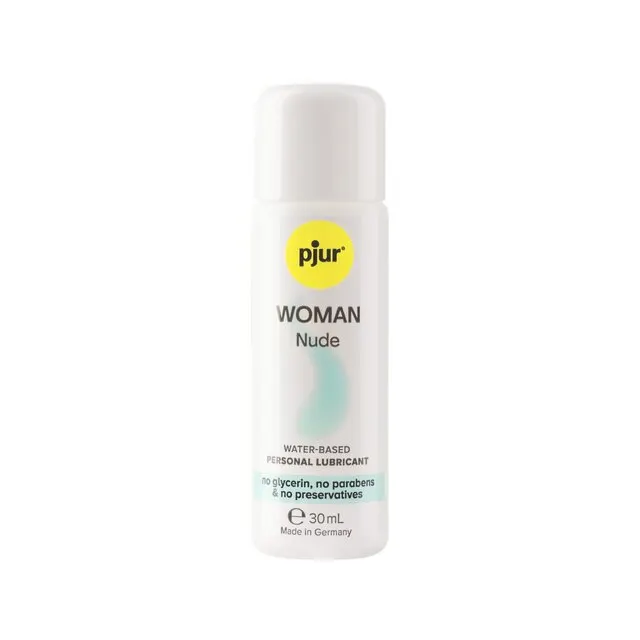
pjur Woman Nude water-based lubricant, 30 ml
Why it is here. A water-based lubricant: it contains no glycerine or fragrance, and does contain propylene glycol. It may help if the pain is linked to dryness or not enough lubrication — this is what Cleveland Clinic and AAFP recommend13. To be honest: in the stories we analysed, lubricant helped in 7 of 16 discussions and did not help in 8; doctors do not suggest it for deep pain or a scar after childbirth. The 30 ml size lets you check how you tolerate it: in one discussion, it was specifically a water-based lubricant that burned.
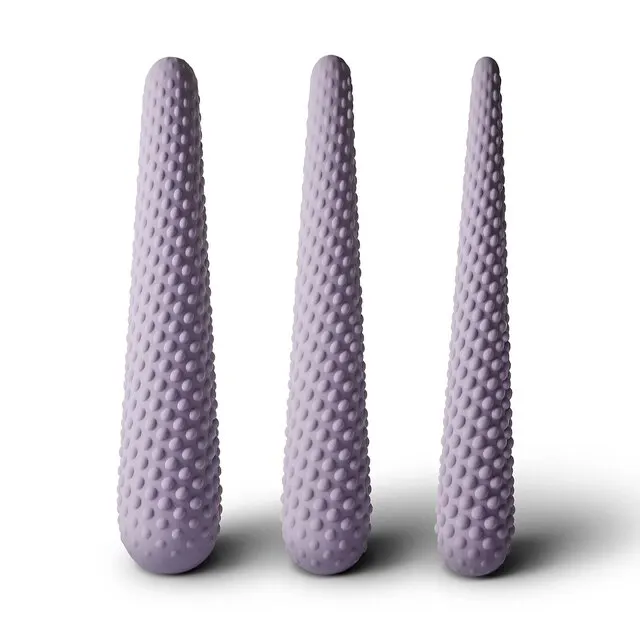
Unite silicone vaginal dilator set (Rocks Off)
Why it is here. A set of silicone dilators. They may help with pain at the entrance — vulvodynia, vestibulodynia, vaginismus — as part of a plan put together by a doctor or a pelvic floor physiotherapist: for vulvodynia, the NHS lists gradual dilation among the methods4, and for vaginismus, ISSM lists exercises with dilators31. In the stories we analysed, dilators were tried in 3 of 46 discussions: in one they helped, although rushing with them made the pain worse; in another they did not. For deep pain, sources recommend something else — positions and controlling depth2.
- Numbing lubricants and sprays. The WHO does not recommend lubricants with anaesthetics for large-scale procurement30, and ISSWSH does not recommend lidocaine for vulvodynia22. Cleveland Clinic advises against having sex through pain2, and numbing can mask that signal.
- Warming and tingling products30; scented products, douching, bubble bath14.
- “Tightening” gels: they do not appear in medical sources on pain during sex.
- Kegel trainers without a physiotherapist: when the pelvic floor muscles are tense, the goal is to learn to relax them31.
- Oils and petroleum jelly with latex condoms3.
- Alcohol “to relax”: it was tried in 4 of 46 discussions and did not help once. In one story, severe pain was caused by fast penetration without preparation when both partners were drunk.
Frequently asked questions
Why does it hurt when it goes in deep?
Causes include endometriosis, pelvic inflammation, cysts, fibroids, adhesions, a tilted womb, and bladder and bowel problems13. Pain can depend on position: in a study of 71 patients with endometriosis and pain during sex, the pain depended on position in 68.3%, and the position most often named as the most painful was from behind24. So you need an examination, not just a change of position.
Can it be endometriosis if my ultrasound is normal?
Will lubricant help?
It hurts after giving birth — how long does this last?
In a meta-analysis of 22 studies, pain during sex affected an average of 35% of women after childbirth, and 22% at 6–12 months17. This is a reason to tell your doctor, not to put up with it10. In the stories we analysed, it lasted from 2 weeks to 2.5 years, and a year or more with scars and severe tears.
It hurts at the entrance even though there is enough lubrication. Why?
Does it hurt because he is too big?
How we researched this
We analysed 46 discussions and personal stories involving around 190 people: 21 threads from the British forum Mumsnet, 7 from the patient.info forum, 4 from the sex education website Scarleteen, 4 personal stories in the media and 10 patient questions on platforms where doctors answer. Languages: English — 36, Polish and Spanish — 4 each, Italian — 2. Collected on 11 November 2026; we did not take the publication dates of the discussions into account.
The unit of count is one thread or one story; an approach was counted if at least one participant described personal experience with it, and on platforms with questions to doctors, only the person asking the question. The sample includes no forums run by clinics or sellers.
Limitations. The sample contains no Russian- or Ukrainian-language stories: the largest forum is protected by an “are you a robot” check, which we chose not to bypass, and on other platforms search did not find pages with personal experience. We did not use Reddit. 28 of the 46 discussions are British. There are 4 discussions about pain in men, and we draw no conclusions from them. Coding was done by hand, with a possible error of one discussion. People’s experience is not statistics: we show how many discussions mention something, not what percentage of people experience it. The ACOG, Mayo Clinic and NICE pages did not open during data collection, so we do not rely on them.
People's experience is not statistics. We count how many discussions mention something, not what percentage of people experience it. 28 of the 46 discussions are from British forums; the sample contains no Russian- or Ukrainian-language stories.
Sources
- Cleveland Clinic — Dyspareunia (Painful Intercourse) (reviewed 25 July 2024)
- Cleveland Clinic Health Essentials — Sex positions with endometriosis (23 March 2023)
- Hill D.A., Taylor C.A. Dyspareunia in Women. Am Fam Physician (AAFP) 2021;103(10):597–604
- NHS — Vulvodynia (reviewed 16 January 2024)
- NHS — Endometriosis (reviewed 27 August 2024)
- RCOG — Endometriosis, patient information (December 2023)
- NHS — Pelvic inflammatory disease (reviewed 17 December 2025)
- NHS — Ovarian cyst (reviewed 21 June 2023)
- NHS — Lichen sclerosus (reviewed 9 December 2024)
- NHS — Sex and contraception after birth (reviewed 7 February 2024)
- NHS — Post-menopausal bleeding (reviewed 24 September 2026)
- NHS — Peyronie's disease (reviewed 3 June 2024)
- NHS — Phimosis (reviewed 6 March 2026)
- Cleveland Clinic — Frenulum Breve (reviewed 8 April 2025)
- Brook — sexual health charity (UK), Painful sex (reviewed May 2024)
- Mitchell K.R. et al. Painful sex (dyspareunia) in women: prevalence and associated factors in a British population probability survey (Natsal-3). BJOG 2017
- Banaei M. et al. Prevalence of postpartum dyspareunia: SR & MA. Int J Gynaecol Obstet 2021
- Ghasemi V. et al. Prevalence of dyspareunia according to mode of delivery: SR & MA. J Obstet Gynaecol 2022
- Jiang H. et al. Selective versus routine use of episiotomy for vaginal birth. Cochrane 2017
- Lara L.A. et al. Hormone therapy for sexual function in perimenopausal and postmenopausal women. Cochrane 2023
- Fernández-Pérez P. et al. Physical therapy interventions in women with dyspareunia: SR & MA. BMC Womens Health 2023
- Goldstein A.T. et al. Vulvodynia: Assessment and Treatment (ISSWSH). J Sex Med 2016 (full text paywalled; position based on the abstract)
- Tetik S., Alkar Ö.Y. Vaginismus, Dyspareunia and Abuse History: SR & MA. J Sex Med 2021
- Enzelsberger S.H. et al. Painful sexual positions in patients with endometriosis (PSST!). J Sex Med 2026
- Fritzer N. et al. Dyspareunia and quality of sex life after surgical excision of endometriosis: SR. Eur J Obstet Gynecol Reprod Biol 2014
- Facchin F. et al. The Subjective Experience of Dyspareunia in Women with Endometriosis: qualitative SR. IJERPH 2021
- Wahl K. et al. Ohnut versus waitlist control for endometriosis-associated deep dyspareunia: pilot RCT. Sex Med 2024
- Tajik P. et al. Sensate focus and position change in women with deep infiltrating endometriosis after surgery: RCT. Int J Reprod Biomed 2023
- Foster D.C. et al. Oral desipramine and topical lidocaine for vulvodynia: RCT. Obstet Gynecol 2010
- WHO / UNFPA / FHI360. Use and procurement of additional lubricants for male and female condoms. WHO/RHR/12.33, 2012
- ISSM — How Can Women With Vaginismus and Their Partners Thrive Sexually? (2023)
- Mumsnet — forum discussion (UK, English)people’s experience
- The Spinoff — personal story (New Zealand, English)people’s experience
- Vice — personal story (English)people’s experience
- Scarleteen — forum discussion (English)people’s experience
- Scarleteen — forum discussion (English)people’s experience
A project of the Keks shop. Not a substitute for medical advice.
Reviewed by: Iryna Kozachko, sexologist, expert in sexual health and intimate relationships, 7 years of experience ·