Research · 13 min read
Vaginismus: causes, treatment and what helps— based on 46 stories
In short
Vaginismus is a condition in which the muscles around the vaginal opening tighten involuntarily when something tries to go in: during sex, with a tampon or at a pelvic exam. It is treatable1. A good first step is a gynaecologist, to rule out other causes of pain15; after that, international guidance recommends combining pelvic floor physiotherapy, gradual dilator exercises and sex therapy67. In the 46 stories we analysed in 10 languages, dilators came up in 33 and were described as helpful in 21, and the most common mistake was rushing and pushing through pain.

Reviewed by: Iryna Kozachkosexologist, expert in sexual health and intimate relationships, 7 years of experience · 10 November 2026
- Research: 46 discussions in 10 languages, 30 medical sources
- How we researched
Published: · Reviewed by:
What it is and why it happens
Vaginismus is a condition in which the vagina suddenly tightens when you try to insert something: during sex, with a tampon or at a gynaecological examination1. If penetration has never been possible, it is called primary vaginismus. If it appears after a time when everything was fine, it is called secondary15.
The main explanation is a vicious circle. Expecting pain tenses the pelvic floor muscles, the tension causes pain, and the pain increases fear3. The word “spasm” is not quite accurate: it was removed from the definition because a spasm could not be confirmed. But studies do find increased tone in pelvic floor muscles that do not relax well when needed925. In the American Psychiatric Association’s DSM-5 classification, vaginismus is combined with pain during sex into “genito-pelvic pain/penetration disorder”: difficulty, pain, fear or tension with penetration lasting longer than 6 months5. ICD-10 uses the codes N94.2 “Vaginismus” and F52.5 “Nonorganic vaginismus”2324.
Why it happens. According to the NHS, possible causes include anxiety and fears around sex, a painful sexual experience, abuse, an unpleasant examination or a difficult birth, seeing sex as something shameful, and painful conditions such as thrush. Sometimes the cause remains unclear1. In a meta-analysis of 14 studies, vaginismus was linked to past sexual and emotional abuse, but not to physical abuse19.
What needs to be ruled out. Similar pain can come from other conditions: provoked vestibulodynia, skin conditions of the vulva (for example, lichen sclerosus), vaginal inflammation and infections, herpes, atrophy, endometriosis5. The International Society for the Study of Vulvovaginal Disease (ISSVD) advises checking all women with suspected vaginismus for vulvodynia and vestibulodynia7. Many people describe the problem as being “too narrow” or having a “thick hymen”. An examination helps tell whether it is a muscle reaction or an anatomical feature5.
How common it is. Estimates vary widely: studies define the disorder differently and survey different groups. For example, among first-year female students in Germany, 2.1% met the full DSM-5 criteria21, while in a study of married women in Iran the figure was 10.5%22. These numbers are not comparable and refer to the broader diagnosis, which also includes pain during sex.
What people say
We went through 46 discussions where people described what they tried and how it turned out. This is their experience, not statistics.
stories reviewed — this is how often “Dilators” helped.
- Dilatorshard or did not help: 15 of 3321 of 33
- Sex therapy and psychotherapy (incl. hypnosis)hard or did not help: 10 of 209 of 20
- Pelvic floor physiotherapyhard or did not help: 4 of 149 of 14
- Lubricanthard or did not help: 3 of 129 of 12
- Numbing creams and sprayshard or did not help: 4 of 51 of 5
- Botox3 of 3
Show as a table
| What they tried | Mentioned | Helped | Found it hard |
|---|---|---|---|
| Dilators | 33 | 21 | 15 |
| Sex therapy and psychotherapy (incl. hypnosis) | 20 | 9 | 10 |
| Pelvic floor physiotherapy | 14 | 9 | 4 |
| Lubricant | 12 | 9 | 3 |
| Numbing creams and sprays | 5 | 1 | 4 |
| Botox | 3 | 3 | — |
Stories, retold without names
During a flare-up she tried to “push through” the pain, got a small tear and went backwards. What helped was returning to dilators and stopping as soon as it started to hurt.
No names, usernames or cities. Swipe the card or press “Next story”.
What doctors say
Where to start. The International Society for Sexual Medicine (ISSM) advises starting with pelvic floor physiotherapy: exercises to relax the pelvic floor muscles and daily work with dilators, gradually increasing in size. Sex therapy or group counselling is added to this6. The ISSVD lists a similar set and adds that more than one method is often needed and that timelines differ for everyone7. MSD recommends pelvic floor physiotherapy for almost all patients5; the NHS recommends sex therapy and home exercises with vaginal trainers1.
How reliable the evidence is. To be honest, the evidence base is weak. A 2012 Cochrane review found only 5 randomised trials with data on 282 women. Their risk of bias was moderate or high: no difference from control was shown, but a benefit cannot be ruled out either11. A meta-analysis of 43 observational studies (1,660 women) showed that penetration was achieved in 79% of cases with any method, and no approach outperformed the others12. A 2026 meta-analysis found the best results with combined approaches, where several specialists work with the woman13.
The strongest individual findings are:
- in a randomised trial of 70 couples, after up to three two-hour sessions of gradual insertion with a therapist, intercourse became possible for 31 of 35 women, compared with 4 of 35 in the control group14;
- in a study of 58 women, after physiotherapy (electrical stimulation and gradual desensitisation) 26 of 28 had successful intercourse, after Botox 20 of 3015.
Dilators. The advice is to use them gradually, starting with the smallest size, and to stop if it hurts4. Women in a 2015 study say the practical and emotional effort involved in using trainers is underestimated. Dilators alone, without support from a specialist, may not be enough16.
Pelvic floor exercises. With vaginismus, the goal is to learn to relax the muscles, not only to squeeze them68. It is best to choose exercises with a physiotherapist10.
Botox. MSD considers botulinum toxin injections into the pelvic floor muscles a method for cases where other approaches have not helped5. ISSM says they “can be considered”, usually together with dilators and physiotherapy6. In a randomised trial, Botox did worse than physiotherapy15.
Numbing gels. A doctor may prescribe a short course of lidocaine5; why we do not recommend numbing lubricants without a prescription is explained under “What to avoid”.
How long it takes. According to Cleveland Clinic, treatment helps most people, with improvement over weeks or months3.
If you have read other advice in Ukrainian
We did not find a separate vaginismus protocol in the Ukrainian Ministry of Health’s register of medical standards (checked 9 November 2026). The Ukrainian portal doc.ua lists a sexologist consultation, physiotherapy, psychotherapy, perineal massage and Kegel exercises, with no mention of dilators and no author or references31. In a Ukrainian magazine article, a gynaecologist-endocrinologist says she is personally against dilators and lists plasma therapy and hormonal correction among the methods, alongside breathing exercises, relaxation and work with a psychotherapist32. Some of this advice matches international guidance: physiotherapy, psychotherapy, relaxation. But ISSM, ISSVD and the NHS base treatment on dilators, pelvic floor physiotherapy with relaxation exercises and sex therapy167, and plasma therapy is not part of their guidance. If you are offered a method that is not in these recommendations, calmly ask your doctor what research it is based on, and discuss dilators and physiotherapy.
Where people and doctors disagree
Each card is one topic. Flip it to see the other side, or switch all at once. The full comparison is in one table below.
The most common approach: mentioned in 33 of 46 discussions, described as helpful in 21 and as hard or unhelpful in 15. Often the same story says both: it helps, but it is long and emotionally demanding work.
In our full sample, 10 of the 14 discussions about Botox come from the forum of a US clinic that performs these injections itself. Across the full sample it was described as helpful in 11 of 14 discussions, but most of those reviews come from clinic websites. In the 46 discussions without clinic sources it comes up in only 3 — all positive, but that is too few to draw conclusions.
Described as helpful in 9 of the 14 discussions that mention it, unhelpful in 4. Negative reviews are more often about the approach: “clinical and painful”, the exercises worked on the treatment table but not in bed.
Bad experiences with doctors appear in 13 of 46 discussions: advice to “just relax”, “we found nothing”, rough examinations, surgery offered straight away.
Mentioned in 5 of 46 discussions; helped in 1, did not help or got in the way in 4.
A partner who does not apply pressure was named as a help in 22 of 46 discussions; pressure, leaving or lack of understanding got in the way in 11. The key is that the woman stays in control.
| Topic | People | Doctors | Verdict |
|---|---|---|---|
| Dilators | PeopleThe most common approach: mentioned in 33 of 46 discussions, described as helpful in 21 and as hard or unhelpful in 15. Often the same story says both: it helps, but it is long and emotionally demanding work. | DoctorsThe basis of treatment in NHS, MSD, Cleveland Clinic and ISSM guidance. At the same time, a Cochrane review did not show an advantage over control, and a qualitative study shows that dilators alone, without support from a specialist, may not be enough.1, 4, 5, 6, 11, 16 | Agree |
| Botox | PeopleIn our full sample, 10 of the 14 discussions about Botox come from the forum of a US clinic that performs these injections itself. Across the full sample it was described as helpful in 11 of 14 discussions, but most of those reviews come from clinic websites. In the 46 discussions without clinic sources it comes up in only 3 — all positive, but that is too few to draw conclusions. | DoctorsA method for cases where other approaches have not helped, usually combined with dilators and physiotherapy. Not licensed for this use in the UK. In a randomised trial it did worse than physiotherapy. In a series of 241 patients, 71% were able to have pain-free sex, but the programme included other methods, the contribution of Botox was not separated out, and 26.6% were lost to follow-up.5, 6, 15, 17, 18 | Disagree |
| Pelvic floor physiotherapy | PeopleDescribed as helpful in 9 of the 14 discussions that mention it, unhelpful in 4. Negative reviews are more often about the approach: “clinical and painful”, the exercises worked on the treatment table but not in bed. | DoctorsMSD recommends it for almost all patients, ISSM as the first step. In a study of 58 women, physiotherapy gave better results than Botox.5, 6, 15, 37 | Partly |
| “Just relax” | PeopleBad experiences with doctors appear in 13 of 46 discussions: advice to “just relax”, “we found nothing”, rough examinations, surgery offered straight away. | DoctorsOfficial sources give no such advice: an examination is needed to rule out other causes, and each step should be explained. A 2023 review specifically documents how hard it is for women with vaginismus to get help.1, 3, 5, 20 | Disagree |
| Numbing creams and sprays | PeopleMentioned in 5 of 46 discussions; helped in 1, did not help or got in the way in 4. | DoctorsA doctor may prescribe lidocaine gel for a short course. In a randomised trial in vulvodynia, lidocaine did no better than placebo. Benzocaine is one of the common allergens in vulval dermatitis.5, 27, 28 | Partly |
| The partner's role | PeopleA partner who does not apply pressure was named as a help in 22 of 46 discussions; pressure, leaving or lack of understanding got in the way in 11. The key is that the woman stays in control. | DoctorsThe NHS suggests involving a partner if you wish, and couples took part in a study of exposure therapy. But in a meta-analysis, partner involvement had no statistically significant effect on the outcome.1, 12, 14 | Partly |
Sexologist’s comment
Women with vaginismus need to understand that this problem can be dealt with. There is no need to put up with pain or force yourself into intimacy, hoping it will pass with time. The sooner you see a specialist and look into the causes, the easier it will be to find a solution. The main thing is not to rush and not to expect instant results from yourself.
What to do, step by step
- Start with a gynaecologist
An examination is needed to rule out other causes of pain: vestibulodynia, skin conditions of the vulva, infections, atrophy, endometriosis57. You can ask for a female doctor, bring someone close to you, talk the examination through beforehand and ask the doctor to explain each step13.
- Build a team
In a 2026 meta-analysis, the best results came from approaches where several specialists work together13: a pelvic floor physiotherapist, a sex therapist or psychotherapist and, if needed, a gynaecologist6. If you have experienced abuse in the past, it is worth telling your specialist: past abuse is linked to vaginismus19, and it may affect the treatment plan.
- Dilators — starting with the smallest
10–15 minutes, with a water-based lubricant. Move to the next size when the current one feels completely easy; stop if it hurts4. Talk to a doctor before you start4.
- Regularly and without rushing
Rushing and trying to push through pain did harm in 10 of the 46 discussions we analysed. In the stories, deadlines women set for themselves tended to add pressure, and setbacks after a period, stress or a break were described as a normal part of the process.
- Agree on things with your partner
You control the pace and every movement. In the stories, intimacy without penetration took the pressure off. In 22 of 46 discussions, support from a partner without pressure was named as a help.
Swipe the steps sideways →
When to see a doctor
- Penetration — sex, a tampon or an examination — is painful or impossible3.
- You are already trying treatment or exercises, but things are not getting better3.
- Pain started after a period when everything was fine: infections, skin conditions of the vulva, atrophy and endometriosis need to be ruled out5.
- You have a rash, itching, unusual discharge or changes in the skin of the vulva — a reason to check for other causes57.
- After dilator exercises, bleeding is heavier than light pink spotting or lasts longer than a day; the exercises cause pain4.
- You are planning a pregnancy: it is advised to start support and treatment in advance29.
Products that may help
Products do not cure anything, but they may help where the research points to them. The Keks shop delivers within Ukraine only.
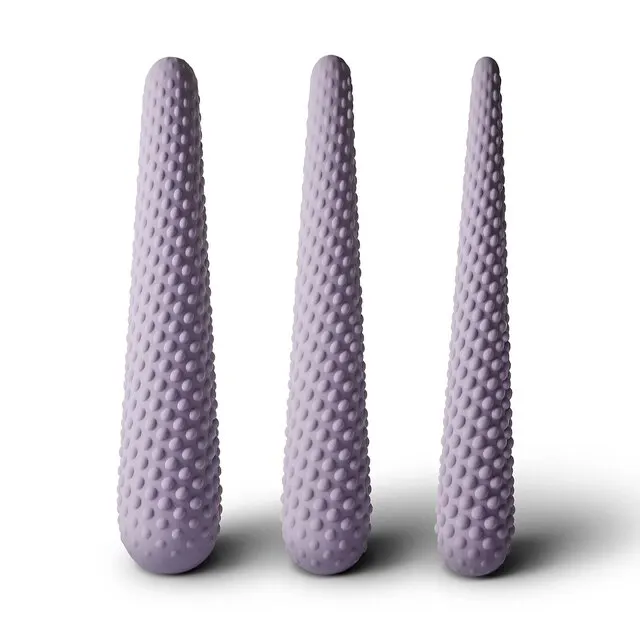
Unite silicone vaginal dilator set (Rocks Off)
Why it is here. Dilators are the most common approach in the stories we analysed (33 of 46 discussions, helpful in 21) and the basis of treatment in NHS and ISSM guidance16. This is a silicone set, and silicone is softer than plastic4. It may help with gradual work following a specialist's plan; talk to a doctor before you start4.
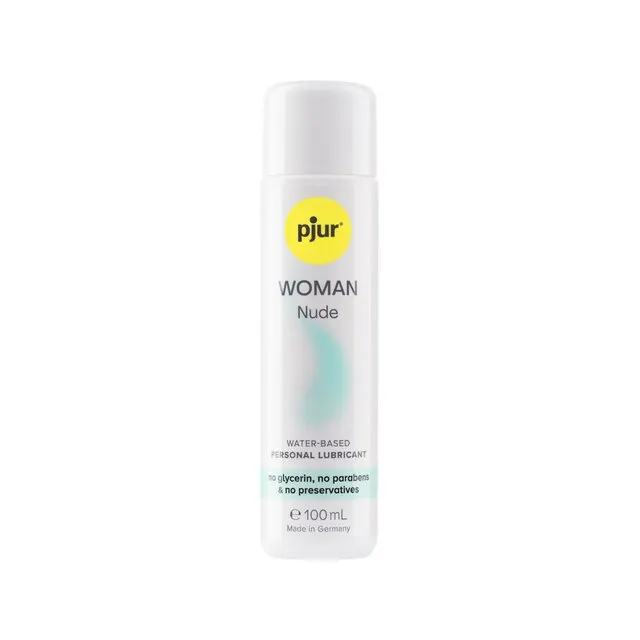
pjur Woman Nude water-based lubricant, 100 ml, free of preservatives, parabens and glycerin
Why it is here. Doctors recommend a water-based lubricant for dilator use45; in 9 of the 12 discussions that talked about lubricant, it was named as a help, and the stories advise not to skimp on it. This one is water-based.
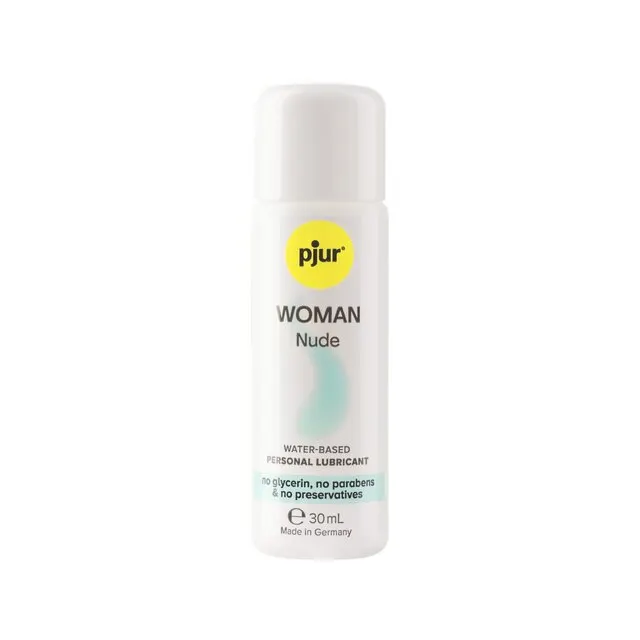
pjur Woman Nude water-based lubricant, 30 ml
Why it is here. The same water-based lubricant in a 30 ml size: to check how sensitive skin tolerates it before buying a large bottle, and to take with you.
- Numbing lubricants and sprays as a “solution”. The WHO does not recommend lubricants with local anaesthetics for bulk procurement26. Local anaesthetics can cause allergy: in a study of 90 patients with vulval complaints, patch testing found a relevant allergic reaction in 35, and benzocaine was among the top five allergens27. In vulvodynia, lidocaine did no better than placebo28, and in the stories we analysed anaesthetics did not help in 4 of 5 mentions. During exercises, pain is a signal to stop4, and numbing can mask it. A doctor may prescribe a short course of lidocaine5.
- Warming, tingling and scented products. Their safety has not been assessed, the WHO does not recommend them for bulk procurement26, and the NHS advises avoiding scented products in the intimate area2. If you have pain, choose products without additives.
- Oils and petroleum jelly with dilators4.
- Starting with a large size, trying to “push through” pain, alcohol “to relax”: in the stories we analysed, this did not help and led to setbacks, and in one case to a tear.
- Improvised objects instead of dilators. In the stories, people turned to them when they had no proper set. Dilators are sold in sets of several sizes so that you can start with the smallest and move up gradually4. If a set is not available to you, ask your doctor or physiotherapist where to start.
Frequently asked questions
Can vaginismus be cured?
Is it vaginismus or a thick hymen?
An examination answers this: the doctor rules out anatomical and other causes5. None of the sources we reviewed recommend surgery for vaginismus as such. In one of the stories we analysed, one doctor immediately suggested hymen surgery, while another said it wasn't needed — and exercises were enough.
Which doctor should I see?
Will Kegel exercises help?
Just squeezing the muscles is not what is needed: with vaginismus the goal is to learn to relax them68. A 2021 review lists biofeedback exercises and dilators guided by a physiotherapist among treatments, but notes that research is still limited10. So it is best to choose exercises together with a physiotherapist.
Can I use lidocaine or a numbing lubricant?
How long does treatment take?
Can I get pregnant and give birth with vaginismus?
Yes. According to a Swedish register, women with vaginismus or vestibulodynia do give birth, though less often than women without these diagnoses. They have caesarean sections more often, frequently at their own request30. Caesarean and assisted deliveries are more common with vaginismus and vulvodynia, so starting support and treatment before pregnancy is advised29.
How can I support a partner with vaginismus?
Don't rush her, leave her in control of the pace and don't treat intimacy without penetration as “not real”. In the stories we analysed, patient support without pressure was named as a help in 22 of 46 discussions.
How we researched this
We analysed 67 discussions and personal stories on forums, ask-a-doctor platforms, in the media and on blogs. The unit of count is one discussion thread or one story; several people often write within it. An approach was counted if at least one participant described personal experience with it. On ask-a-doctor platforms we counted only patients’ experience, not doctors’ advice.
Of the 67, we excluded 21 sources owned by sellers of treatment: 19 threads from the forum and blog of a US clinic that treats, among other things, with Botox, the website of a paid programme and a podcast from a physiotherapy practice. All “X of 46” figures in the article are based on the remaining 46 discussions. In 10 languages: English — 20, Turkish — 9, Spanish, Italian and Arabic — 3 each, German, Polish and French — 2 each, Dutch and Ukrainian — 1 each. Collected on 9 November 2026. The discussions were published in different years; we did not take the publication date into account.
Limitations. Reddit and the largest Russian-language forums are protected by “are you a robot” checks, and we chose not to bypass them. As a result, the sample contains one Ukrainian-language story and no Russian-language ones. Almost half of the stories are in English. In some Turkish threads, participants themselves suspect hidden clinic advertising; without these threads, the picture does not change. Coding was done by hand, with a possible error of 1–2 discussions. People’s experience is not statistics: we show how many discussions mention something, not what percentage of women experience it. Medical facts come only from medical and scientific sources, each numbered in the list.
People's experience is not statistics. We count how many discussions mention something, not what percentage of people experience it. Forums run by clinics that sell treatment are not among these 46 stories.
Sources
- NHS — Vaginismus
- NHS — Vulvodynia
- Cleveland Clinic — Vaginismus
- Cleveland Clinic — Vaginal Dilators
- MSD Manual, Professional Version (Russian edition) — Genito-pelvic pain / penetration disorder, 07.2023
- ISSM — How Can Women With Vaginismus and Their Partners Thrive Sexually? (2023)
- ISSVD — Vaginismo, patient information (2021)
- MedlinePlus — Vaginismus
- Padoa A. et al. The Overactive Pelvic Floor and Sexual Dysfunction, Part 1: Pathophysiology. Sex Med Rev 2021;9(1):64–75
- Padoa A. et al. The Overactive Pelvic Floor and Sexual Dysfunction, Part 2: Evaluation and Treatment. Sex Med Rev 2021;9(1):76–92
- Cochrane — Interventions for vaginismus (Melnik et al., 2012)
- Maseroli E. et al. Outcome of Medical and Psychosexual Interventions for Vaginismus: SR & MA. J Sex Med 2018
- Zulfikaroglu E. Vaginismus treatment: SR & MA of contemporary approaches. J Sex Med 2026
- ter Kuile M.M. et al. Therapist-aided exposure for lifelong vaginismus: RCT. J Consult Clin Psychol 2013
- Yaraghi M. et al. Physiotherapy vs botulinum toxin for vaginismus, RCT. Int Urogynecol J 2019
- Macey K. et al. Women's experiences of using vaginal trainers. BMC Womens Health 2015
- Pacik P.T., Geletta S. Vaginismus Treatment: Clinical Trials Follow Up 241 Patients. Sex Med 2017
- GP Notebook (UK) — Management of vaginismus
- Tetik S., Alkar Ö.Y. Vaginismus, Dyspareunia and Abuse History: SR & MA. J Sex Med 2021
- Pithavadian R. et al. Experiences of women seeking help for vaginismus: integrative review. Womens Health 2023
- Zarski A.C. et al. DSM-5 GPPPD in university students. Int J Clin Health Psychol 2025
- Alizadeh A. et al. Prevalence of GPPPD, population-based study (Iran). J Sex Med 2019
- WHO, ICD-10 — N94 (N94.2 Vaginismus)
- WHO, ICD-10 — F52 (F52.5 Nonorganic vaginismus)
- Graziottin A., Bottanelli M., Bertolasi L. Vaginismus: a clinical and neurophysiological study. Urodinamica 2004;14:117–121
- WHO / UNFPA / FHI360. Use and procurement of additional lubricants for male and female condoms. WHO/RHR/12.33, 2012
- O'Gorman S.M., Torgerson R.R. Allergic contact dermatitis of the vulva. Dermatitis 2013
- Foster D.C. et al. Oral desipramine and topical lidocaine for vulvodynia: RCT. Obstet Gynecol 2010
- Baril S. et al. Obstetric outcomes in women with vulvodynia and vaginismus: SR. Arch Gynecol Obstet 2024
- Möller L. et al. Reproduction and mode of delivery in vaginismus / LPV: Swedish register. BJOG 2015
- doc.ua — Vaginismus (Ukrainian medical portal, no author or references)for reference, not a medical source
- Wonderzine UA — What is vaginismus and how to treat it (answers from a gynaecologist-endocrinologist and a psychotherapist, in Ukrainian)for reference, not a medical source
- doc.ua — directory of sexologists in Kyivfor reference, not a medical source
- Archer Magazine — personal story (Australia, English)people’s experience
- Teenergizer — personal story (Ukraine, Ukrainian)people’s experience
- Apotheken Umschau — personal story (Germany, German)people’s experience
- Vice NL — personal story (Netherlands, Dutch)people’s experience
- Kadınlar Kulübü — forum discussion (Turkey, Turkish)people’s experience
- États d'dames podcast — personal story (France, French)people’s experience
A project of the Keks shop. Not a substitute for medical advice.
Reviewed by: Iryna Kozachko, sexologist, expert in sexual health and intimate relationships, 7 years of experience ·