Research · 10 min read
Water-based lube: how to choose— experience from 35 discussions and WHO criteria
In short
For most people, a water-based lubricant with a short ingredient list is a good fit: no fragrance, colourings, “warming” effect or nonoxynol-9. It is compatible with all condoms and toys346. The main medical criterion is osmolality: the WHO sets a limit of 1,200 mOsm/kg, ideally no higher than 38012. Product descriptions rarely state it: of the 24 water-based lubricants we looked at, only one did. “Glycerin-free” is a reasonable precaution if you are prone to thrush or irritation, but not proven protection615. In the 35 discussions we analysed, the most common complaints were stickiness (in 8) and burning or irritation (in 7).

Reviewed by: Iryna Kozachkosexologist, expert in sexual health and intimate relationships, 7 years of experience · 12 November 2026
- Research: 35 discussions in 2 languages, 23 medical sources
- How we researched
Published: · Reviewed by:
How lubricants differ and what matters in the ingredients
Lubricants can be water-based, silicone-based or oil-based. Water-based ones are affordable and compatible with condoms and silicone toys, but you may need to reapply them during sex. Silicone ones last longer but can damage silicone toys. Oil-based ones stain fabric and are not suitable for latex condoms6.
Water-based lubricants differ a lot from one another, and the packaging barely shows it. Medically, the key measure is osmolality: how concentrated the solution is. Vaginal secretions normally have 260–290 mOsm/kg, semen 250–380, while most commercial lubricants have 2,000–6,000. Concentration is raised mainly by glycerin and propylene glycol1.
Why it matters. In a laboratory model, mucosal irritation increased with osmolality: a gel at 316 mOsm/kg had no effect, while a gel at 5,848 caused severe irritation with tissue damage12. On a three-dimensional model of the vaginal mucosa, all four lubricants above 1,500 damaged the epithelial layers, while there was no damage below 40013. Concentrated gels were toxic to cells, while those close to the body’s own secretions and silicone ones were not1114. A caveat: these are data from laboratories and tissue samples; clinical studies are scarce.
“Glycerin-free” does not mean “low osmolality”. An annex to the WHO document lists Astroglide gel, free of glycerin and parabens, at 4,806 mOsm/kg — higher than KY Jelly at 2,0071.
pH. Normal vaginal pH is 3.8–4.5, rectal pH about 716. These are measures of the body, not requirements for a lubricant.
What people say
We went through 35 discussions where people described what they tried and how it turned out. This is their experience, not statistics.
Stories, retold without names
A pharmacy lubricant left stains on clothes and underwear and had a hint of chewing gum. The best turned out to be a lubricant with no taste or smell that washes off with water.
No names, usernames or cities. Swipe the card or press “Next story”.
What doctors say
WHO standards. In the 2012 document, the WHO and UNFPA name an osmolality of no more than 380 mOsm/kg as ideal for a lubricant and 1,200 as an interim procurement limit: no more than 9.9% glycerin or 8.3% propylene glycol. For vaginal use they then advised a pH of about 4.5, for rectal use 5.5–7, and did not recommend above 71. In the 2026 specification, the osmolality limit remained below 1,200, and the pH range was widened to 4.0–7.0 with a tolerance of ±1.0. Preferred are lubricants that do not shift the pH of the vagina and rectum. They should contain no fragrances, colourings, spermicides, herbal or “pleasure-enhancing” additives. The recommendation to avoid polyquaternium was dropped as unsupported2. The specification is written for procurement in reproductive health programmes, but its figures are also a clear benchmark for shoppers.
Clinical reviews advise choosing products as close as possible to natural secretions: products vary widely in pH and osmolality, and some may be harmful20. A 2025 article in the Canadian journal for family physicians recommends water-based or silicone lubricants for people who use condoms or have recurrent infections and irritation — provided the lubricant is within the recommended osmolality and pH21.
What should not be in it. According to two Cochrane reviews, nonoxynol-9 does not protect against STIs or HIV, and genital lesions are more common with it910; the CDC also advises avoiding it5. In the lab, the chlorhexidine in KY Jelly killed all three lactobacillus strains tested11. On parabens, ISSM writes that their effect on vaginal flora and cells is debated and more research is needed6.
Glycerin and thrush. We found no human studies in which glycerin in a lubricant causes thrush. ISSM writes that glycerin and propylene glycol may, according to some data, damage tissue, but data are limited6. A Russian review from 2023, citing work on microbicides, says that 10% glycerin did not affect susceptibility to infection. Whether this was tested in humans is not clear from the review. The review was published with support from the company Laboratoriya Bioritm, and three of its six authors are company employees, although the authors declared no conflict of interest22. A link in humans was found for other practices. In a cohort of 141 women, oils inside the vagina were associated with Candida colonisation (44.4% versus 5%), and petroleum jelly with bacterial vaginosis (2.2 times higher risk)15. This is an association, not a proven cause.
Trying to conceive. In the lab, ordinary water-based gels reduce sperm motility by 60–100% within 60 minutes; canola oil, mineral oil and hydroxyethylcellulose-based gels do not7. But in cohorts of 296 and 6,467 women, lubricant did not reduce the chance of conception1718. A 2024 systematic review calls the data scarce19.
For dryness, the NHS distinguishes between a lubricant before sex and a vaginal moisturiser for ongoing dryness3. According to the Menopause Society’s position statement, most women with mild symptoms find over-the-counter products enough8.
If you have seen “pH 3.8–4.5” as a requirement for lubricant
It is easy to mistake this figure for a standard for lubricants. In fact, 3.8–4.5 is the pH of a healthy vagina16. For the lubricant itself, the WHO named about 4.5 in 2012 and allowed 4.0–7.0 in 202612. A Russian review from 2023 also gives 4–7 for lubricants22. Osmolality and an ingredient list without unnecessary additives matter more.
Where people and doctors disagree
Each card is one topic. Flip it to see the other side, or switch all at once. The full comparison is in one table below.
Stickiness is the most common complaint: in 8 of 35 discussions, most often about “conception-friendly” gels. In 4, people complained that the lubricant dries quickly and needs topping up. Opinions about the same product differ.
Complaints of burning, irritation or itching from a particular lubricant appear in 7 of 35 discussions. For some people, switching brands helped. But in one discussion, every lubricant burned, even olive oil.
People themselves linked thrush or a urinary tract infection to a lubricant in 5 of 35 discussions, 3 of them about “conception-friendly” gels. Glycerin was named as a possible cause in 2.
Oils and household substitutes — olive oil, petroleum jelly — are used or recommended in 5 of 35 discussions. In one, a doctor suggested olive oil; in another, a teenager simply had no lubricant.
Trying to get pregnant is discussed in 12 of 35. People praise the special gels, but themselves call their success a possible coincidence. These same gels are criticised for stickiness more often than others.
In 7 of 35 discussions, a lubricant alone was not enough: local oestrogen, dilators or time helped, for example the end of breastfeeding. In the discussions, lubricants and moisturisers get confused.
| Topic | People | Doctors | Verdict |
|---|---|---|---|
| Stickiness and drying out | PeopleStickiness is the most common complaint: in 8 of 35 discussions, most often about “conception-friendly” gels. In 4, people complained that the lubricant dries quickly and needs topping up. Opinions about the same product differ. | DoctorsISSM warns that a water-based lubricant may need to be reapplied during sex. Medicine does not assess stickiness as a health problem — it is a matter of comfort.6 | Partly |
| Burning and irritation | PeopleComplaints of burning, irritation or itching from a particular lubricant appear in 7 of 35 discussions. For some people, switching brands helped. But in one discussion, every lubricant burned, even olive oil. | DoctorsIn laboratory models, concentrated gels irritate and damage the mucosa, while gels close to natural secretions do not. If everything burns, the cause may not be the lubricant: the NHS advises seeing a doctor if dryness lasts several weeks or there is unusual discharge.3, 11, 12, 13 | Partly |
| Glycerin and thrush | PeoplePeople themselves linked thrush or a urinary tract infection to a lubricant in 5 of 35 discussions, 3 of them about “conception-friendly” gels. Glycerin was named as a possible cause in 2. | DoctorsWe found no human studies in which glycerin in a lubricant causes thrush; ISSM says data are limited. A link in humans was found for other practices: in a cohort of 141 women, Candida was found in 44.4% of those using oils inside the vagina versus 5%, and petroleum jelly was linked to bacterial vaginosis15.6, 15 | Disagree |
| Oils and petroleum jelly | PeopleOils and household substitutes — olive oil, petroleum jelly — are used or recommended in 5 of 35 discussions. In one, a doctor suggested olive oil; in another, a teenager simply had no lubricant. | DoctorsWHO, NHS and CDC: oils and petroleum jelly must not be used with latex condoms — they weaken them. Oils inside the vagina are linked to Candida, petroleum jelly to bacterial vaginosis.1, 4, 5, 15 | Disagree |
| “Conception-friendly” lubricants | PeopleTrying to get pregnant is discussed in 12 of 35. People praise the special gels, but themselves call their success a possible coincidence. These same gels are criticised for stickiness more often than others. | DoctorsIn the lab, ordinary water-based gels reduce sperm motility by 60–100% within an hour. But in cohorts of 296 and 6,467 women, lubricant did not reduce the chance of conception. There is no evidence that a “fertility” gel helps you get pregnant.7, 17, 18, 19 | Partly |
| Dryness in menopause and after childbirth | PeopleIn 7 of 35 discussions, a lubricant alone was not enough: local oestrogen, dilators or time helped, for example the end of breastfeeding. In the discussions, lubricants and moisturisers get confused. | DoctorsThe NHS separates these products: a lubricant is for before sex, a vaginal moisturiser for ongoing dryness. Most women with mild menopausal symptoms find over-the-counter products enough.3, 8 | Partly |
Sexologist’s comment
When choosing a lubricant, I would advise paying attention not only to the brand or price but, above all, to the ingredients. Especially if you are prone to irritation or your mucosa is particularly sensitive. It is better to start with simple products without fragrances, warming components and unnecessary additives. And if burning or discomfort appears after use, you should not get used to it — it is better to try another product.
What to do, step by step
- Water as the base
A water-based lubricant works with all condoms and toys and washes off easily346. It is a sensible place to start if you have no special needs.
- A short ingredient list, no additives
For vaginal sex — no fragrance, colourings, flavours, “warming” or “cooling”23. Keep flavoured lubricants for oral sex.
- Check what is not in it
Nonoxynol-9 should never be there5910. Chlorhexidine is best avoided if you are sensitive: in the lab, a gel containing it killed all the lactobacillus strains tested11.
- If you are prone to thrush or irritation
You can choose a glycerin-free lubricant — as a precaution, not proven protection6. Propylene glycol also raises osmolality1, so “glycerin-free” does not necessarily mean “gentle”.
- Osmolality, if it is listed
The WHO benchmark is up to 1,200 mOsm/kg, ideally no higher than 38012. It is rarely listed: of the 24 keks-shop product pages we looked at, only one.
- Lubricant pH and vaginal pH are different things
3.8–4.5 is the pH of the vagina itself, not a requirement for a lubricant16. In 2012 the WHO advised a pH of about 4.5 for vaginal use and 5.5–7 for anal use, and did not recommend above 71. The 2026 specification gives 4.0–7.0 for all lubricants. Lubricants that do not shift the pH of the vagina and rectum are preferred2.
- For longer sex or anal sex
A water-based lubricant may need reapplying6, and during anal sex it can be absorbed quickly30. In that case a thick water-based or a silicone lubricant will do, but silicone can damage silicone toys6.
- If you are trying to get pregnant
According to cohort data, ordinary lubricant does not lower the chance of conception1718. To be on the safe side, you can use a hydroxyethylcellulose-based gel labelled as sperm-compatible7. Hydroxyethylcellulose in the ingredients of an ordinary lubricant does not by itself mean this.
- A small bottle and the after-opening date
Reactions are individual, so you can start with a small bottle or samples2429. The period of use after opening should be stated on the packaging2; it is better to throw out expired lubricant27.
Swipe the steps sideways →
Products that may help
Products do not cure anything, but they may help where the research points to them. The Keks shop delivers within Ukraine only.
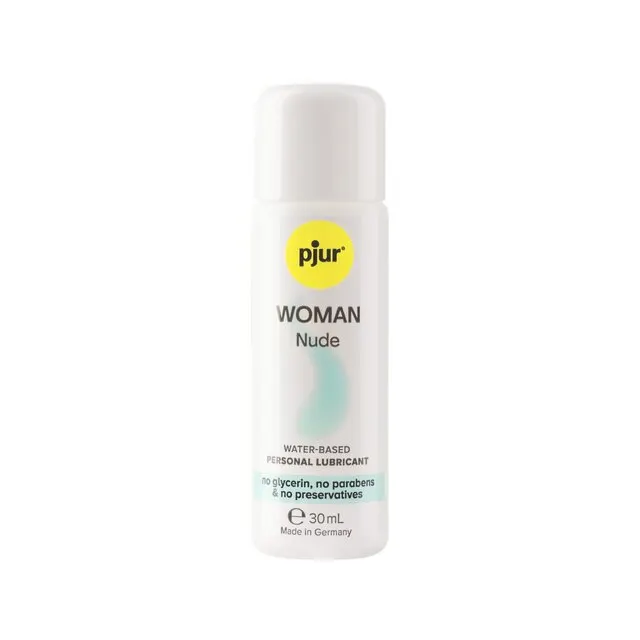
pjur Woman Nude water-based lubricant, 30 ml
Why it is here. The product page states it is free of glycerin, preservatives and parabens and compatible with condoms and toys. It may suit you if you are prone to thrush and want to rule out glycerin — as a precaution, not protection6. To be honest: propylene glycol is second in the ingredient list. Like glycerin, it raises osmolality1 and, according to some data, may damage the mucosa6, and the manufacturer does not state the osmolality itself. 30 ml — to check how you tolerate it.
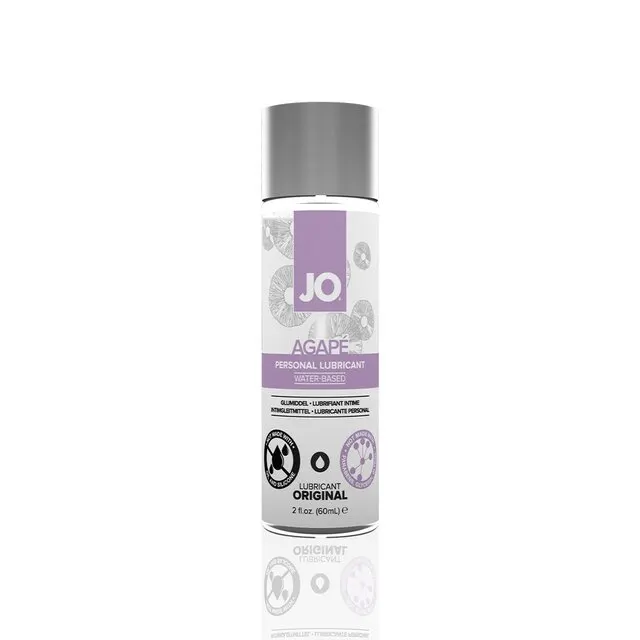
JO Agape Original water-based lubricant, 60 ml, free of glycerin, propylene glycol and parabens
Why it is here. The only one of the 24 keks-shop water-based lubricants we looked at that lists its osmolality — “241”. No unit is given; this is data from the product page, and we found no independent measurements. Stated to be free of glycerin, propylene glycol and parabens. Instead of propylene glycol, it contains propanediol. Condom compatibility is not stated on the page — check the packaging.
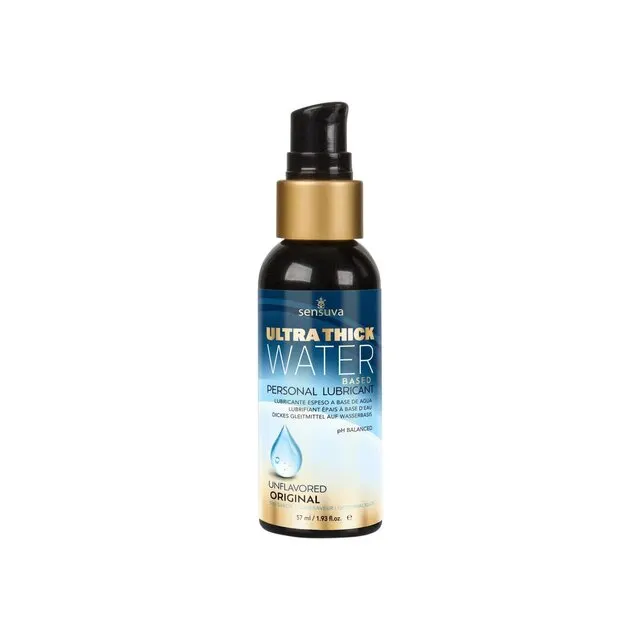
Sensuva Ultra-Thick water-based lubricant, 57 ml, free of glycerin and parabens
Why it is here. A thick water-based lubricant, stated to be free of glycerin and parabens and compatible with latex and silicone. It may suit you if ordinary water-based lubricant dries quickly — a complaint in 4 of 35 discussions — and silicone lubricant is not an option because of your toys6. The ingredients are not listed on the page: if you are prone to irritation, read them on the packaging first.
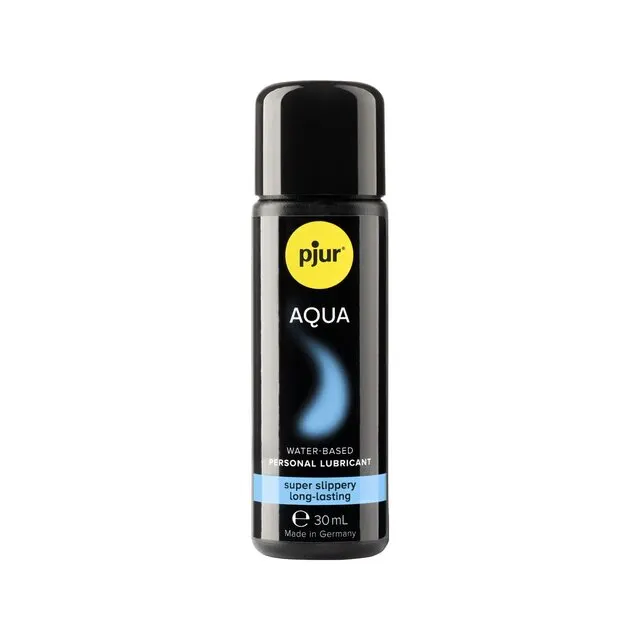
pjur Aqua water-based lubricant, 30 ml
Why it is here. A basic water-based lubricant without oils or fragrance, compatible with condoms and all toys; usable for 6 months after opening (according to the product page). It contains glycerin: if you avoid it as a precaution, choose a glycerin-free lubricant.
- Petroleum jelly, baby oil, cooking oil and lotions — with latex condoms: they weaken the condom145. Oils inside the vagina are linked to Candida, petroleum jelly to bacterial vaginosis15.
- Lubricants with nonoxynol-9: it does not protect against STIs or HIV, and mucosal lesions are more common with it910.
- Scented, flavoured, “warming” and “cooling” lubricants — for vaginal sex, if your skin is sensitive23.
- Numbing gels “for comfort”: the WHO does not recommend lubricants with local anaesthetics for bulk procurement1.
- Silicone lubricant — with silicone toys6.
When to see a doctor
- Dryness lasts several weeks and what you have tried yourself does not help, or it is affecting your daily life3.
- You have unusual discharge or bleeding after sex, between periods or after menopause3.
- Itching and white, cottage-cheese-like discharge appear for the first time, come back more than 4 times a year, have not cleared up after treatment, or you are pregnant31.
- Any lubricant burns or stings, not just one brand, and switching brands has not helped: the cause may not be the lubricant3.
- Pain during sex does not go away even with lubricant3.
Frequently asked questions
What is the difference between water-based and silicone lube?
Can lube cause thrush?
Which lube can I use with condoms?
Why does lube burn?
In laboratory models, irritation increases with the gel's osmolality1213, so switching brands sometimes helps. In one of the stories, the lubricant that burned had been open longer than its after-opening period27. If every lubricant burns and switching brands has not helped, the cause may not be the lubricant. The NHS advises seeing a doctor if what you have tried yourself has not helped for several weeks3.
Can we use lube when trying to get pregnant?
How long does an opened lubricant last?
The period of use after opening should be stated on the packaging: the 2026 WHO specification requires it2.
Which lube for dryness after childbirth or in menopause?
A water-based one before sex, and for ongoing dryness also a vaginal moisturiser: these are different products3. If a lubricant alone is not enough, discuss other options with your doctor.
How we researched this
We analysed 44 discussions and personal stories on forums and in comments under articles. The unit of count is one thread or one story; several people often write within it: in total, more than 250 participants with personal experience. A topic was counted if at least one participant who had used a lubricant themselves wrote about it.
Of the 44, we excluded 9: seven threads with affiliate links to shops, one with a reply from a brand representative and an advertising review, and one from a clinic forum. All “X of 35” figures are based on the remaining 35 discussions. Platforms: Mumsnet (UK) — 20, Scarleteen (USA) — 7, Hellobee (USA) — 3, Patient.info (UK) — 2, Breast Cancer Now forum (UK) — 2, T—Zh (Russia) — 1. Languages: English — 34, Russian — 1. Collected on 11 November 2026; discussions from 2010–2026.
Limitations. Reddit, woman.ru and Yandex Reviews are closed to our tool, and we chose not to bypass their protection. There are no Ukrainian-language discussions and only one in Russian, so we draw no conclusions about Russian- and Ukrainian-speaking readers. Most threads come from a British forum, and 12 of 35 are about trying to get pregnant. The British brands Yes and Sylk, which are often praised (Yes in 7 of 35 discussions, Sylk in 4), are not sold at keks-shop. Coding was based on summaries of the pages, with a possible error of 1–2 discussions. Of the 24 keks-shop water-based lubricant pages we looked at, osmolality is listed on only one, and there are no independent measurements. Ingredients and product claims are taken from keks-shop pages on 11 November 2026.
People’s experience is not statistics: we show how many discussions mention something, not what percentage of people experience it. Medical facts come only from medical and scientific sources, each numbered in the list.
People's experience is not statistics. We count how many discussions mention something, not what percentage of people experience it. Threads with affiliate links, an advertising review and a clinic forum are not among these 35.
Sources
- WHO / UNFPA / FHI360. Use and procurement of additional lubricants for male and female condoms. WHO/RHR/12.33, 2012
- WHO / UNFPA. Specifications for personal lubricants. WHO Technical Report Series No. 1067, 2026, Annex 6
- NHS — Vaginal dryness (reviewed 24 July 2025)
- NHS — Condoms (reviewed 26 January 2024)
- CDC — External condom use
- ISSM — What Are Some Considerations for Selecting a Personal Lubricant? (2021)
- ASRM / SREI Practice Committee. Optimizing natural fertility: a committee opinion. Fertil Steril 2022
- The North American Menopause Society. The 2020 GSM position statement. Menopause 2020
- Wilkinson D. et al. Nonoxynol-9 for preventing vaginal acquisition of sexually transmitted infections. Cochrane 2002
- Wilkinson D. et al. Nonoxynol-9 for preventing vaginal acquisition of HIV. Cochrane 2002
- Dezzutti C.S. et al. Is Wetter Better? An Evaluation of Over-the-Counter Personal Lubricants. PLoS One 2012
- Adriaens E., Remon J.P. Mucosal irritation from lubricants. Sex Transm Dis 2008
- Ayehunie S. et al. Hyperosmolal lubricants on a 3D vaginal epithelial model. Toxicol Rep 2018
- Wilkinson E.M. et al. Osmolality and cytotoxicity of lubricants. J Infect Dis 2019
- Brown J.M. et al. Intravaginal practices and risk of bacterial vaginosis and candidiasis. Obstet Gynecol 2013
- Herbenick D. et al. Lubricants, pleasure and genital symptoms: RCT. J Sex Med 2011
- Steiner A.Z. et al. Lubricants and natural fertility, cohort. Obstet Gynecol 2012
- McInerney K.A. et al. Lubricants and chance of conception, cohort. BJOG 2018
- Gumerova et al. Lubricants when trying to conceive: systematic review. Hum Fertil 2024
- Potter N., Panay N. Vaginal lubricants and moisturisers: a review. Climacteric 2021
- Vanderschee R., Kostov S. Can Fam Physician 2025
- Stenyaeva N.N. et al. Vaginal lubricants: efficacy, tolerability, safety and functionality. Akusherstvo i Ginekologiya 2023, in Russian (supported by Laboratoriya Bioritm LLC; three of the authors are its employees)
- T—Zh — personal experience comparing three lubricants (Russia, Russian)people’s experience
- Patient.info community — Irritation with lube (UK, English)people’s experience
- Scarleteen boards — glycerin and thrush (USA, English)people’s experience
- Mumsnet — Conceive Plus lubricants (UK, English)people’s experience
- Scarleteen boards — burning from lube used past its after-opening period (USA, English)people’s experience
- Patient.info community — Stings badly when using lube (UK, English)people’s experience
- Scarleteen boards — internal burning from water-based lube (USA, English)people’s experience
- Scarleteen boards — lube for anal sex and toys (USA, English)people’s experience
- NHS — Vaginal thrush
A project of the Keks shop. Not a substitute for medical advice.
Reviewed by: Iryna Kozachko, sexologist, expert in sexual health and intimate relationships, 7 years of experience ·